

The African Jesuit AIDS Network (AJAN), in collaboration with the Kenya Catholic Prison Chaplaincy, undertook a five-day Training of Trainers (ToT) on the AJAN HIV and AIDS Prevention Programme for Youth (AHAPPY) for prison chaplains and catechists from Kenya’s Nyanza Region at Ukweli Pastoral Centre. The training that took place from 1st to 5th September 2026 marks another milestone in AJAN’s continued commitment to accompanying inmates and young people in correctional facilities through integral formation, rehabilitation and hope.
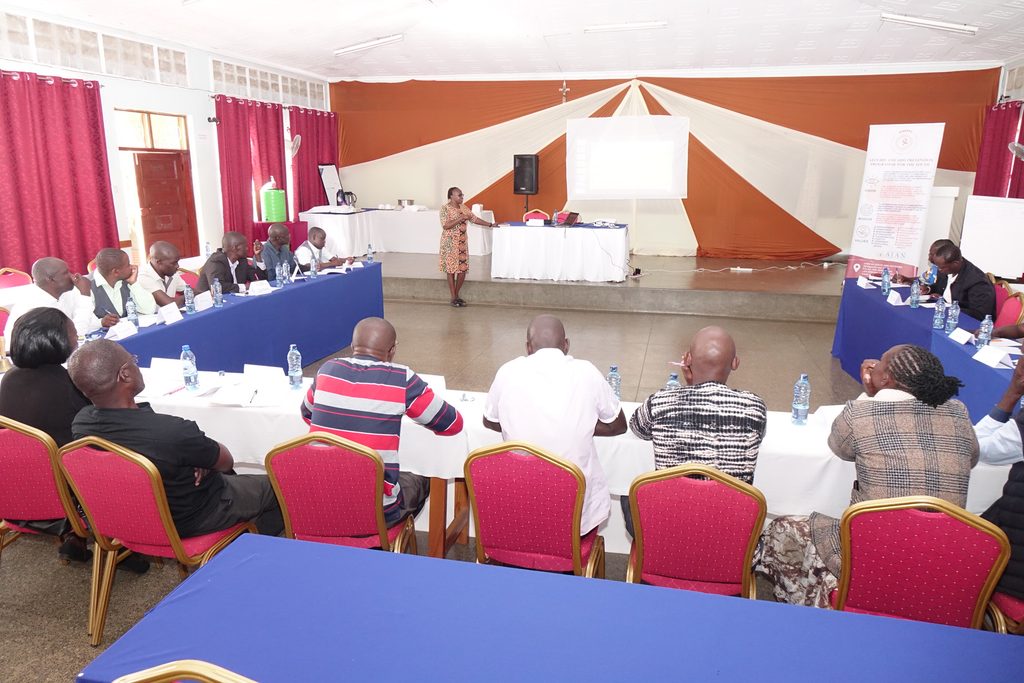
The training brought together 22 prison catechists and chaplains serving correctional institutions across six counties in Kenya’s Nyanza Region. The participants were drawn from different correctional facilities, including two from Migori County, representing Kiendege and Migori Prisons; two from Kisii County, representing Kisii Maximum and Kisii Women’s Prisons; one from Nyamira County; five from Kisumu County, with three from Kisumu Command and two from Kibos Command; two from Homa Bay County, representing Homa Bay Main Prison and Rachuonyo; and two from Siaya County, representing Siaya Main and Siaya Women’s Prisons.
Equipping agents of hope
The opening day led by Ms. Sergon Pascalia, participants shared their expectations and learning objectives, many expressed a desire to strengthen their capacity to accompany young people behind bars with greater empathy, confidence and purpose. They reflected on the understanding that rehabilitation extends beyond confinement; it involves restoring dignity, rebuilding hope and preparing inmates for successful reintegration into society. Ms Sergon introduced participants to the vision and objectives of AHAPPY, anchored in the Ignatian principle of cura personalis—care for the whole person.


A central theme of the sessions was understanding oneself before accompanying others. Participants were immersed in AHAPPY’s five dimensions of human development—physical, social, emotional, intellectual and spiritual—inviting them to reflect on their own lives, strengths and areas for growth. Through interactive discussions, personal reflections and participatory learning, the catechists and chaplains came to appreciate that authentic accompaniment begins with self-awareness and the recognition that every person is created in the image and likeness of God, deserving of dignity, care and compassion.
Facilitator Sch. Peter Onah Agi deepened this reflection through the African philosophy of Ubuntu, the profound spiritual and philosophical concept expressed in the words, “I am because we are.” He emphasized that true humanity is discovered and nurtured through our relationships with others, reminding participants that their calling as prison pastoral agents is not merely to provide guidance but to journey alongside the inmates entrusted to their care. The reflection challenged participants to first cultivate their own emotional, spiritual and personal well-being so that they can accompany young inmates with empathy, authenticity and hope, becoming instruments of healing and transformation within correctional communities.

The sessions emphasized that those entrusted with caring for inmates must first nurture their own well-being in order to become authentic guides and mentors realizing that their well-being, spiritual growth, and very existence are tied to the community and the world around them. At the centre of it is the understanding that Restorative Justice is Spiritual harmony that requires healing relationships, forgiveness, and reconciliation rather than revenge or isolation.

Building on this foundation, Ms. Lilian Waweru led participants through a practical session on physical, emotional and intellectual intelligence, helping them understand how these dimensions shape both personal well-being and effective accompaniment. She encouraged participants to recognize their physical health as the foundation for service, develop emotional intelligence by understanding and managing their own emotions while empathizing with others, and strengthen their intellectual intelligence through critical thinking and sound decision-making. The session highlighted that prison catechists and chaplains can only accompany young inmates effectively when they first cultivate these capacities within themselves, enabling them to communicate with compassion, respond to challenges wisely and guide those under their care with authenticity and hope.
The five-day session saw participants being immersed in the five dimensions of the AHAPPY Programme, through group discussions, open reflections and sharing, case studies, and practical team activities such as short dramas.
When covering Module B (This World I Live In) and Module D (Knowing Myself to Grow Myself), participants were taken through scenarios specifically dealing with issues that inmates deal with while in prison; handling past trauma, and managing emotional vulnerabilities within a confined environment.
Participants were challenged when accompanying inmates and also those under their care and supervision to practice how to use root-cause analysis so that when they mentor inmates, they can help them identify why they made certain choices rather than just addressing the symptoms of their behavior.

During Module C (Facing a World with HIV & AIDS), the participants were taken through a session that moved them beyond basic medical definitions to deal with the social and psychological aspects of accompanying and understanding those living with HIV. Participants took part in role-playing exercises aimed at combating deep-rooted stigma and social abandonment that inmates face both inside prison and from their families.
At the end of the five-day workshop, the training transitioned into a workplan development session, where participants worked in small groups to outline activities they would undertake upon returning to their respective work stations. The session was designed to translate the knowledge and skills gained during the training into concrete actions, enabling the participants to effectively roll out the AHAPPY programme within their correctional institutions. Through the workplans, the catechists and chaplains left the training with practical tools and clear strategies to implement an independent and sustainable AHAPPY programme, while continuing to accompany and empower those under their care.

Sharing his reflection at the end of the five-day AHAPPY training, Fr. Dennis Kimweri, Deputy Regional Chaplain, Nyanza Region Kenya said,
“We have not always had many opportunities to improve our practical skills, and this AHAPPY training has therefore been very relevant in helping us to grow. From this training, there is going to be a greater impact from our spiritual workers within and across the Nyanza Region. During one of our meetings, we sat together and agreed on exchange programmes among ourselves so that we can share this knowledge with inmates and with the communities around us. We would be very happy if we could help mould our young people in such a way that they do not end up in prison. Our heartfelt gratitude goes to the AJAN office, the benefactors and all people of goodwill who have made this programme possible. We are grateful to the donors and to everyone who continues to support this mission. We are invited to recognise that if people do not come to church, let the Church reach out to them. This is an inspiration that guided the Church, and the late Pope Francis often reminded shepherds to ‘smell the sheep’—to be close to the people and reach out to them. That is what AJAN is doing.” Read More
One of the participants Mr. Daniel Odhiambo Onyango, principal chaplain working with the Kenya Prison Service, stationed at Kibos Maximum Prison shared that,

“I am privileged to be among the catechists and chaplains who participated in the AHAPPY Training of Trainers organised by AJAN. It has greatly empowered me and opened my eyes to new ways of understanding myself, the people I serve and the challenges we encounter in the prison environment.
One of the things that impacted me most was the emphasis on self-awareness and Ignatian spirituality. Through the sessions, I was challenged to rediscover myself and become more attentive to my actions, values and beliefs. I realised that before I can effectively accompany others, I must first understand myself and work on my own weaknesses and strengths.
The training also helped me to look differently at the problems we encounter in prisons, including drug and substance abuse, HIV, STIs and other vulnerabilities. I particularly appreciated the tree model, which taught us to look beyond the visible effects of a problem and search for its root causes. Many times, we focus on the “fruits”—the manifestations of a problem—without asking what is happening in the “roots”. Yet it is in the roots that we find the mindsets, beliefs and convictions that often shape behaviour.
This reflection has changed the way I understand my ministry. If we want to help the people we serve experience real and lasting change, we must go beyond treating the symptoms and help them address the deeper issues affecting their lives. We need to accompany them from where they are, especially in their moments of vulnerability, towards the goals they hope to achieve….” Read More
Mr. Bernard Opiyo, a chaplain working at Siaya GK Main Prison, accompanying male inmates undergoing rehabilitation, Kenya Prison Service, Nyanza Region stated that,
“My experience has been enriching, and I have learnt a great deal. The training reminded me that knowledge has no limitation and that there is always something new to learn.
Before coming for the training, I was not fully aware of some of the challenges facing young people. However, the knowledge and skills I have gained through AJAN’s AHAPPY programme have given me a better understanding of these challenges and prepared me to return to my station and share what I have learnt with the young people I serve.
One area that particularly resonated with my work was the issue of the disconnect between young people and the wider community. Many young people experience vulnerability because of unemployment, social pressures and other challenges, and some may become exposed to crime, drug use and other harmful behaviours. Through this training, I have come to understand more deeply how these vulnerabilities can affect young people and how, as a chaplain, I can accompany them towards making healthier and more positive choices…” Read More

Ms. Pauline Atieno, A catechist at Kibos Medium Prison, Kenya Prison Service Nyanza Region shared that,
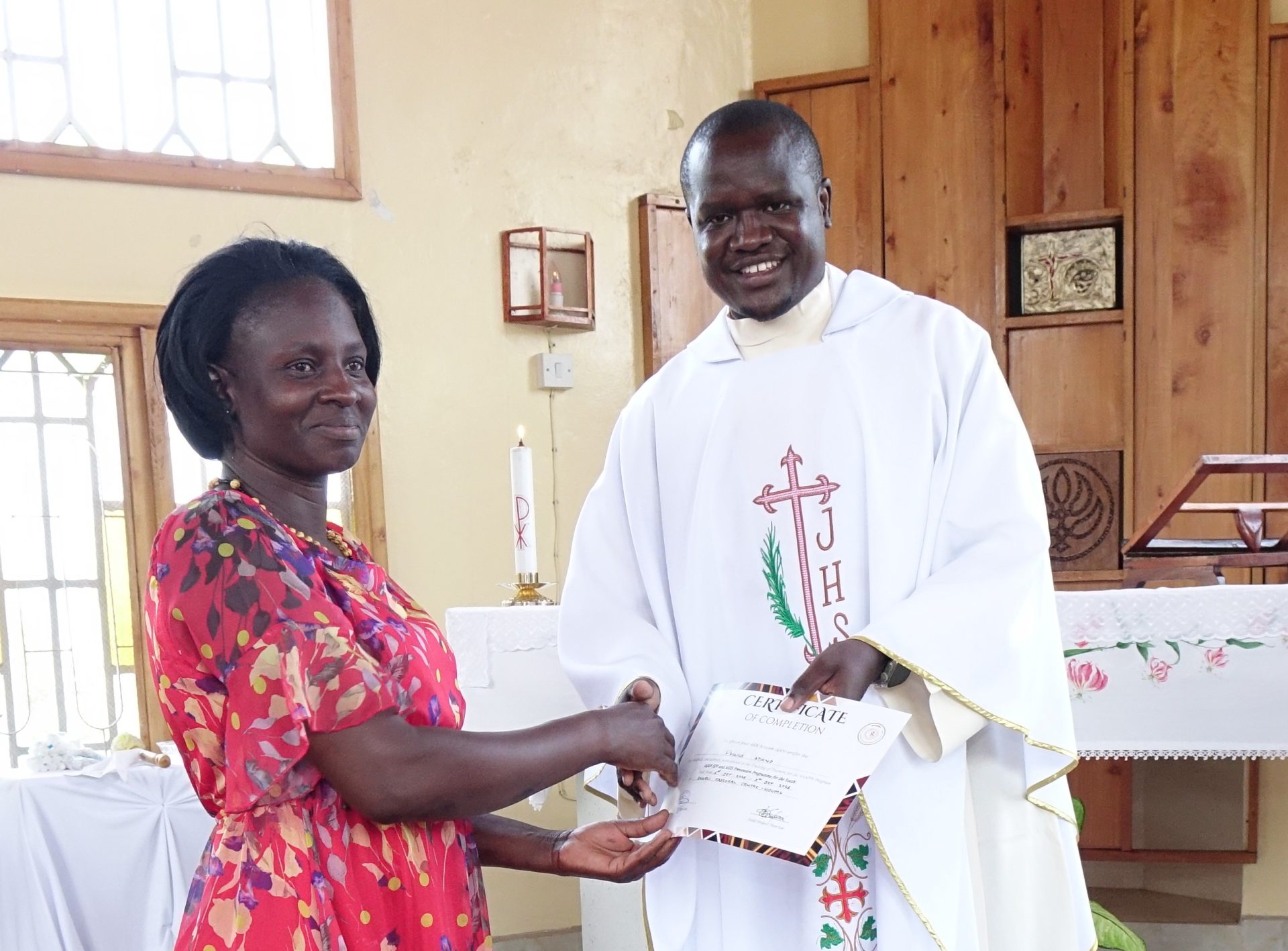
“The five-day AHAPPY Training of Trainers organised by AJAN has been a deeply enriching experience for me. It has helped me to understand myself better and to reflect on the kind of person I am and the legacy I want to leave behind.
One of the most important lessons I have taken from the training is self-awareness. Before coming here, I had not taken enough time to ask myself who I really am. Now I have begun to understand myself better and to reflect on how others know me and experience my presence. I have also started asking myself an important question: when I eventually leave the service, what will people say about me, and what will I have left behind? For me, that is about legacy.
The training also challenged me to reflect on communication. I asked myself, “Am I really a good communicator?” I have learnt that effective communication is not only about speaking; it is also about the response we receive from others. If we communicate poorly, people may not listen or respond in the way we expect. This has encouraged me to become more intentional about how I communicate with the inmates I serve…” Read More
Following the training, the participants were commissioned to return to their respective correctional institutions and put into practice the knowledge, skills and values they had acquired. The commissioning marked not an end, but a continuation of their mission of accompaniment—equipping them to walk alongside young inmates with compassion, dignity and hope.


Through the AHAPPY programme, the chaplains and catechists are now better prepared to create spaces where young people can reflect on their choices, confront the challenges they face, discover their strengths and take greater responsibility for their lives. Their commitment also extends beyond the prison walls, as they seek to strengthen families and communities in preventing HIV and AIDS, addressing vulnerabilities and supporting the successful reintegration of inmates into society.

The Nyanza training therefore reaffirmed AJAN’s conviction that meaningful rehabilitation requires more than addressing immediate needs. It calls for accompaniment, integral formation and the restoration of human dignity. By accompanying those at the margins and reaching out to people where they are, the Church continues to live its mission of being close to those in need—helping young people discover that their past does not have to define their future, and that even in difficult circumstances, there is always room for healing, growth and hope.
By, Mr. Dennis Owuoche,
AJAN Communications Officer.

 English
  Français
  Português
Comments are closed.