

The African Jesuit AIDS Network (AJAN) concluded a five-day AHAPPY Training of Trainers (ToT) for Prison Catechists and Chaplains from Kenya’s Western Region on 29 August 2026, equipping 15 participants with practical knowledge and skills to support young people and vulnerable persons within prison settings.
The training, held from 25–29 August, focused on AJAN’s AHAPPY – HIV and AIDS Prevention Program for the Youth, while also going beyond HIV prevention to address personal growth, emotional well-being, relationships, leadership and social responsibility.

Introducing the programme, Ms. Pascalis Sergon, Acting AJAN Director, highlighted AJAN’s experience in working with prison communities, including AHAPPY interventions at Naivasha Women’s Prison and Lang’ata Women’s Prison. She encouraged the catechists and chaplains to see themselves not simply as recipients of training, but as agents capable of multiplying the knowledge and skills gained among the young people they serve.

The Western Region training also builds on previous capacity-building initiatives in other parts of the country. AJAN has trained prison catechists and chaplains in the South Rift and Coastal Regions, creating a growing network of trained personnel who can integrate HIV and AIDS prevention, life skills and holistic formation into their ministry within correctional facilities.
The approach reflects AJAN’s conviction that HIV prevention is not simply about transmitting information. It is also about helping individuals understand themselves, recognise their dignity, make responsible decisions and develop the capacity to navigate the challenges they encounter.
The first day of the training introduced participants to the five modules of the AHAPPY programme, beginning with Module A: Awakening to Myself.Rather than immersing the participants to various issues affecting our young people and inmates, AHAPPY begins with the individual. Participants were invited to explore a fundamental question: Who am I?

The opening sessions encouraged participants to deepen their understanding of themselves, their identity, their gifts, their emotions, their relationships and their purpose. Central to the reflection was the understanding that each person is created by God with dignity, purpose and unique potential.
Participants were introduced to the five dimensions of the human person—spiritual, physical, social, emotional and intellectual. These dimensions are interconnected, and growth in one area can influence the others. For those working within prison ministry, understanding this holistic view of the person is essential to providing meaningful guidance, formation and support.

One of the reflective moments facilitated by Ms. Sergon Pascalia used a simple but powerful image: a tomato pierced by several toothpicks.
The tomato represented the human person—soft, vulnerable and capable of being affected by the pressures of life. Each toothpick represented a different challenge, burden, worry or painful experience that a person may encounter. As more toothpicks are added, the tomato becomes increasingly pierced and fragile. While it may still appear to be holding together from the outside, internally it is carrying the marks of every pressure placed upon it.
The imagery resonated particularly strongly with the reality of prison ministry. Prison catechists and chaplains, too, are human beings. They encounter difficult situations, listen to people’s pain, carry responsibilities and face pressures of their own. Like the tomato, they may sometimes have many “toothpicks” piercing their own lives—yet they are still expected to remain present, listen, offer guidance and provide support to others.
The reflection therefore invited participants to recognise an important truth: those who serve others also need to recognise and care for themselves.For a chaplain or catechist, being available to listen to an inmate’s struggles requires more than professional responsibility. It requires emotional presence, patience, empathy and the ability to recognise one’s own limitations. The exercise encouraged participants to reflect on the questions: What are my own “toothpicks”? What burdens am I carrying? How do they affect the way I relate to those I serve? And how can I remain a source of support without losing sight of my own well-being?
The imagery reinforced the importance of self-awareness, emotional intelligence and personal resilience—qualities that are essential for anyone entrusted with guiding and supporting others.
Understanding the Whole Person
The physical and social dimensions were explored by Ms. Lilian Waweru, who guided participants to reflect on how physical well-being, relationships and social environments influence people’s behaviour, attitudes and decisions. Building on that participants alos were taken through the topic on HIV and AIDS prevention, Drug Abuse and how they can develop themselves.

The sessions encouraged participants to look beyond individual behaviour and consider the wider environment in which young people and inmates live. Family relationships, friendships, peer influence, community, social expectations and the circumstances surrounding individuals can all shape their choices and understanding of themselves.
The discussion also reinforced the importance of creating safe and supportive spaces where young people and inmates can ask questions, express themselves and receive guidance without fear of judgement.
Emotional and Intellectual Growth
Mr. Dennis Owuoche facilitated sessions on the emotional and intellectual dimensions, inviting participants to examine the role of emotions, thought processes, knowledge and decision-making in personal development.
Participants reflected on the fact that emotions are an important part of human life and that emotional awareness can help individuals respond to situations more constructively. Equally important is the development of intellectual capabilities—the ability to think critically, seek knowledge, evaluate information and make sound decisions.
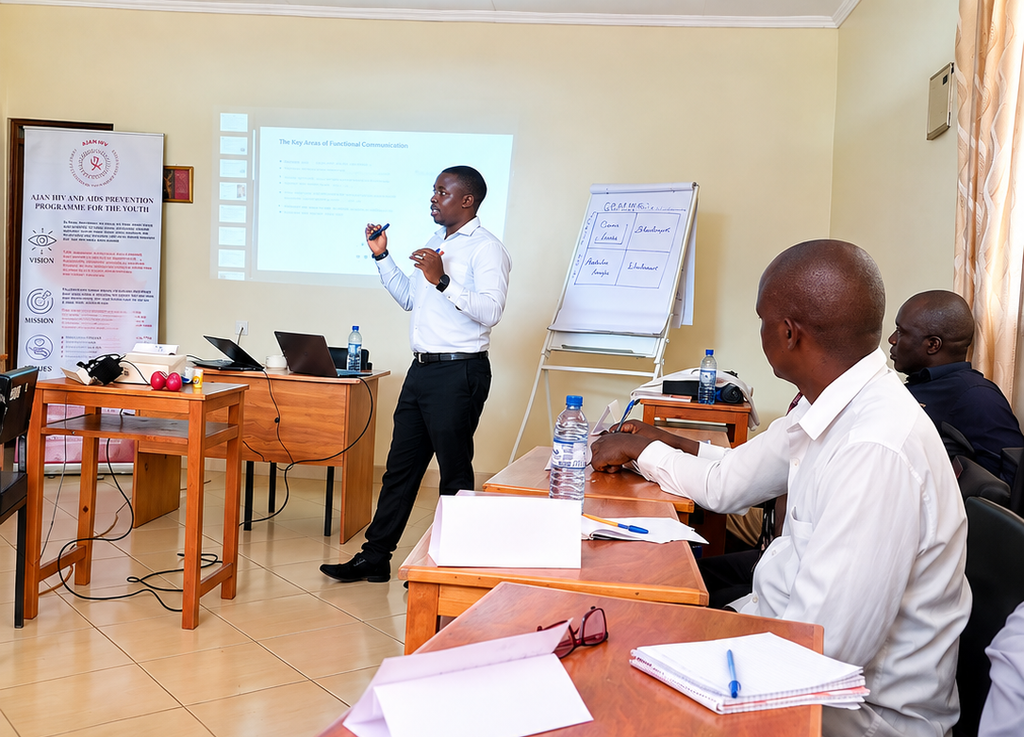
For prison catechists and chaplains, these skills are particularly important because their ministry involves working with individuals who may be dealing with complex personal, social and emotional circumstances.
The sessions therefore challenged participants not only to acquire information, but also to become reflective and intentional facilitators capable of creating learning experiences that encourage young people and inmates to think, question, reflect and take responsibility for their choices.
From Training to Formation and Transformation
A key message emerging from the training days was that effective formation begins with the person.
Before catechists and chaplains can effectively guide and empower others, they must first be willing to understand themselves, recognise their own strengths and limitations, and appreciate the different dimensions that make up the human person.

This is consistent with AJAN’s wider approach to youth formation, which places human dignity, personal responsibility, informed choices and holistic development at the centre of HIV prevention and personal transformation.
The five-day training explored the AHAPPY methodology and equip participants with practical facilitation skills so that they can eventually bring the programme to inmates and young people within their respective prison settings.
One of the reflections that particularly resonated with the participants was the recognition that those who accompany others also need to understand and care for themselves. Through practical exercises and reflection, participants explored how accumulated stress, difficult experiences and the demanding nature of prison ministry can affect their emotional and social well-being.

For Fr. Nyongesa, a Prison Chaplain, the training offered an important opportunity to strengthen the ministry of those who walk alongside inmates. He reflected on the responsibility of chaplains and catechists to look beyond the mistakes that may have brought people into prison and instead recognise their dignity, potential and capacity for transformation. The training, he noted, provides practical tools that can help them accompany inmates with greater understanding, patience and compassion.
Sr. Margaret Natiir appreciated the opportunity to reflect on the human person from a holistic perspective and the importance of self-awareness in accompanying others.
“The training has challenged me to first understand myself before trying to understand and guide others. I have gained a deeper appreciation of the emotional and social realities that young people carry and the importance of creating spaces where they can speak, reflect and make responsible choices.”


For Mr. Martin Waswa, the training provided a new perspective on the role of a catechist and the importance of moving beyond simply imparting information.
“Being a catechist is not only about giving information. It is about walking with young people, understanding their realities and helping them develop the values, confidence and skills they need to make responsible decisions. What we have learnt here is something we must share with others. They are those young people we guide particularly me I work with them and some of the are living with HIV and therefore their is need to undertand the situations they go through and accompany them, giving them hope that all will be well, ensuring they adhere to their medications.”
Strengthening a Growing Network
The Western Region Training of Trainers represents more than another training activity. It contributes to the establishment of a wider network of trained prison catechists and chaplains who can become AHAPPY facilitators and mentors within correctional institutions.
As AHAPPY continues to expand across prison settings, these trained personnel have an important role to play in ensuring that inmates and young people are not only informed about HIV prevention, but are also supported in developing the personal, social, emotional, intellectual and spiritual capacities needed to make healthy and responsible choices.
By, Mr. Dennis Owuoche,
AJAN Communications Officer.

 English
  Français
  Português
Comments are closed.