Bujumbura, Burundi — For women living with HIV, economic vulnerability can often compound the challenges they already face. Through skills development, collective enterprise and mutual support, Service Yezu Mwiza (SYM), a socio-medical organisation working to combat HIV and AIDS in the Jesuit Rwanda-Burundi Province operating under the civil responsibility of the Association of Jesuit Fathers of Burundi (APJB) with support from the African Jesuit AIDS Network (AJAN), implemented the Building Resilience in Women and Young Girls Project in Burundi project in Burundi helping women turn sewing and crafting into a pathway towards greater economic independence, dignity and resilience.
The project is directly supporting 30 women living with HIV, with approximately 180 household members and other indirect beneficiaries expected to benefit from improved economic opportunities.
From skills to enterprise
The women received training in sewing, basic design, crafting and entrepreneurship. They were then organised into cooperative structures where they could work together, share knowledge and responsibilities, access equipment and produce items for the local market.

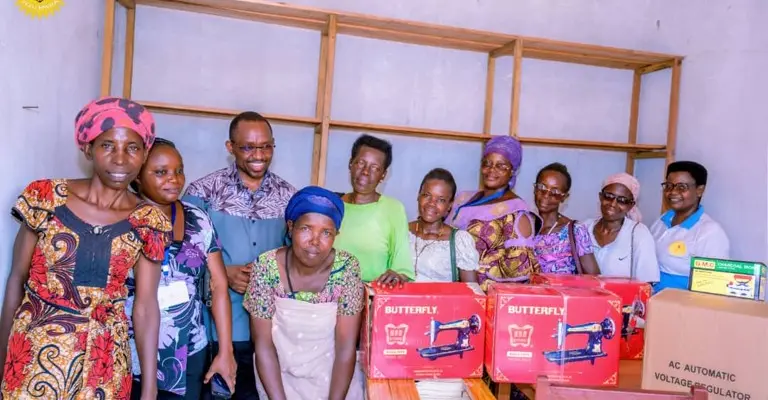
With support from AJAN, the beneficiaries received sewing machines, an overlock or finishing machine, sewing accessories, fabrics and other materials needed to establish and operate their workshop.
This support has enabled the women to move beyond training and begin actual production and income generation.
One of the most encouraging results has been the production of school uniforms. One cooperative has already produced 81 pairs of uniforms, of which 71 have been sold, representing approximately 88 per cent of total production. The remaining 10 uniforms are available for sale, while production continues in response to market demand, particularly as schools prepare to reopen.
Beyond school uniforms, the women produce clothing for adults and children and provide sewing and finishing services to customers in their communities. Neighbours also approach the cooperative for assistance with repairing torn clothing, creating additional opportunities for income.
Building more than livelihoods
The cooperative is becoming more than a place of economic activity. It has also created a space where women living with HIV can come together, share experiences, discuss challenges and encourage one another.
The income generated is helping beneficiaries contribute to school fees and other educational expenses, meet basic household needs and reduce their dependence on external assistance. As the businesses develop, the women also have an opportunity to reinvest part of their earnings into their enterprises.
For women who have experienced economic dependence, stigma or social exclusion, acquiring new skills and participating in productive work is also helping to restore confidence and a sense of dignity. The project is enabling beneficiaries to see themselves not only as recipients of support, but as skilled women who can produce, earn, support their families and contribute to their communities.


“My living conditions have improved”
For Lydie Barigenera, 54, a widow and mother of four, the project has brought a tangible change to her family.
“Before receiving the sewing equipment, my income was not enough to meet my family’s basic needs. Today, thanks to the support provided through Service Yezu Mwiza, I am able to sew different products, including clothes for adults and children, school uniforms and other finishing work. My living conditions have improved. Two of my children had previously dropped out of school, but thanks to the income I am now generating, they will be able to return to school.”

Lydie’s experience reflects the wider aspiration of the initiative: to create opportunities through which women living with HIV can strengthen their livelihoods while rebuilding confidence and hope for the future.
The project also complements Service Yezu Mwiza’s health and psychosocial accompaniment. By helping women strengthen household economic stability, the initiative seeks to reduce some of the economic pressures that can affect their daily lives and contribute to continuity in HIV care and treatment.
Looking ahead: growing the cooperative
With the progress achieved so far, the beneficiaries have identified several priorities for strengthening and expanding the cooperative.
One of the immediate priorities is the bulk purchase of fabrics, thread and other production materials. By purchasing materials in larger quantities, the cooperative hopes to reduce production costs and improve profit margins.The women also plan to expand the workshop to create more space for production, accommodate additional equipment and improve working conditions.
As the cooperatives grow, the beneficiaries hope to train additional women living with HIV, allowing the benefits of the initiative to reach more women facing economic vulnerability. In this way, the cooperative can become not only a source of livelihood for its current members but also a platform for sharing skills and creating opportunities for others.
The cooperatives intend to respond to customer demand through Product diversification by producing a wider range of items, including clothing for children and adults, school uniforms and other sewing and crafting products. Using local fairs and exhibitions as an important avenue for growth to increase the visibility of the cooperatives, promote their products, attract new customers and open up new market opportunities.

The progress achieved through the Sewing and Crafting Cooperatives demonstrates the value of investing in the economic empowerment of women living with HIV. With support from AJAN, SYM has provided beneficiaries with practical skills, productive equipment and an opportunity to generate income through their own work.
The initiative is helping women move from economic vulnerability towards greater self-reliance while strengthening their dignity, confidence and resilience. It is also demonstrating how economic empowerment can complement health, psychosocial and spiritual accompaniment as part of a more holistic response to the realities faced by people living with HIV.
The beneficiaries and the SYM team have expressed their sincere gratitude to AJAN for its support. The contribution has provided more than sewing machines and materials; it has created an opportunity for women to rebuild their confidence, support their families and envision a more secure future.
For the women gathered around their sewing machines in Burundi, every garment produced represents more than a finished product. It is a sign of skills gained, livelihoods strengthened and hope being woven—one stitch at a time.
By, Jeannine NDUWAYEZU SJ.,
SYM IGA Supervisor.

 English
  Français
  Português
Comments are closed.